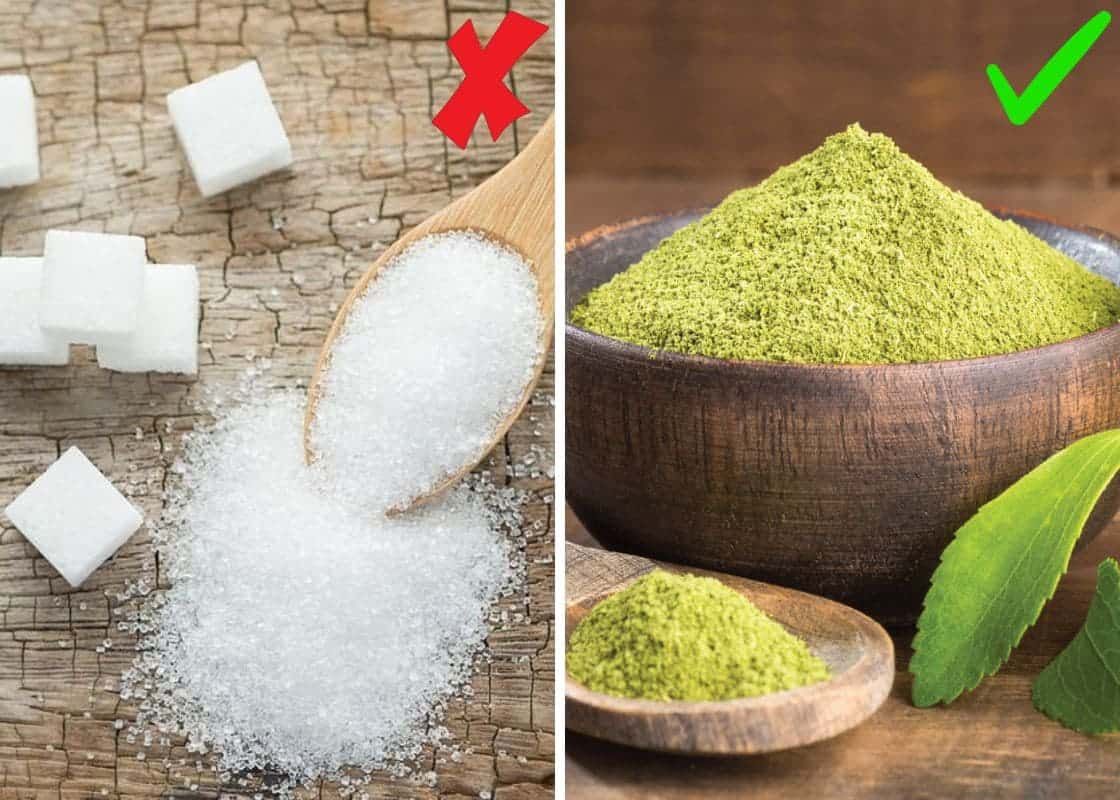
Refined white sugar is one of the biggest drivers of weight gain, chronic inflammation, energy crashes, and insulin resistance. But when you’re cutting back on calories or trying to drop fat, completely eliminating sweetness from your life can feel unsustainable.
Luckily, nature has provided powerful plant-based alternatives that deliver zero calories, won’t spike your blood sugar, and offer real health benefits.
If you’re looking to sweeten your coffee, tea, smoothies, or oatmeal without the guilt, here are four herbs and natural plant sweeteners to swap in today.
1. Stevia (Stevia Rebaudiana): The Zero-Calorie Plant King
Derived from the leaves of the Stevia rebaudiana plant native to South America, Stevia is arguably the most popular herbal sugar substitute in the world.
- Sweetness Level: 200 to 300 times sweeter than regular table sugar.
- Calorie Count: 0 calories.
- Impact on Blood Sugar: Zero glycemic index (GI). It does not raise blood sugar or insulin levels, making it ideal for diabetics and anyone on a low-carb diet.
- How to Use: Because it is extremely concentrated, a tiny drop of liquid stevia or a pinch of pure stevia powder goes a long way. Use it in morning coffee, tea, or protein shakes.
Pro Tip: Look for 100% pure stevia extract without added bulking agents like maltodextrin or dextrose.
2. Sweet Leaf / Aztec Sweet Herb (Phylla Dulcis): The Ancient Herb
Long before modern sweeteners existed, the Aztecs used Phylla dulcis (commonly known as Sweet Leaf or Lippia dulcis) as a natural remedy and sweetener.
- Sweetness Level: Up to 1,000 times sweeter than sugar.
- Health Benefits: Traditionally used to soothe coughs, colds, and respiratory irritation due to its natural essential oils.
- How to Use: Fresh or dried leaves can be steeped directly into hot tea or herbal infusions to add a rich, aromatic sweetness with a subtle minty or camphor note.
3. Licorice Root (Glycyrrhiza Glabra): Sweetness with Digestive Support
Licorice root contains an active compound called glycyrrhizin, which gives the root its distinctively sweet flavor profile without contributing to sugar overload.
- Sweetness Level: 30 to 50 times sweeter than cane sugar.
- Health Benefits: Excellent for soothing the stomach lining, supporting gut digestion, and reducing heartburn.
- How to Use: Dried licorice root cut into chips or powder makes an incredible addition to homemade herbal teas. It provides a long-lasting, deep sweetness that lingers pleasantly on the palate.
Note: If you have high blood pressure, consume licorice root in moderation, as excessive amounts of glycyrrhizin can affect sodium balance.
4. Monk Fruit (Siraitia Grosvenorii): The Eastern Miracle
While technically a small gourd/fruit rather than a leaf, Monk Fruit (Luo Han Guo) has been cultivated by Buddhist monks for centuries in Southeast Asia and is harvested as a potent natural sweetener.
- Sweetness Level: 150 to 250 times sweeter than sugar.
- Calorie Count: 0 calories.
- Health Benefits: Packed with unique antioxidants called mogrosides, which give the fruit its sweetness without triggering glucose spikes.
- How to Use: Monk fruit extract has a clean, sugar-like taste without the bitter aftertaste some people experience with stevia. It works exceptionally well in baking, cooking, or hot beverages.
Quick Comparison: White Sugar vs. Herbal Substitutes
| Sweetener | Calories per tsp | Glycemic Index | Main Benefit |
|---|---|---|---|
| White Table Sugar | 16 kcal | 65 (High) | None (Empty calories) |
| Pure Stevia | 0 kcal | 0 | Zero blood sugar impact |
| Monk Fruit | 0 kcal | 0 | Clean taste & antioxidant rich |
| Licorice Root | Near 0 | 0 | Supports gut health & digestion |
The Bottom Line
You don’t have to give up taste to reach your body composition goals. Replacing processed table sugar with natural plant-based substitutes like Stevia or Monk Fruit is an effortless strategy to shave off hundreds of unnecessary calories every single week.
Leave a Reply